Screen print transfer
Detailed designs in Pantone colors are first screen printed onto special transfer paper. Then, these designs are precisely transferred onto various fabrics using a heat press, resulting in vibrant and durable high-quality prints suitable for a wide range of textile applications.Daarna worden deze ontwerpen met een hittepers nauwkeurig overgebracht op verschillende stoffen, wat resulteert in levendige en duurzame prints van hoge kwaliteit die geschikt zijn voor diverse textieltoepassingen.

Reflective
Reflective transfers with 3M technology contain reflective beads that bounce light back, enhancing visibility in the dark. The plottable version is suitable for simple shapes and applications, while the screen print version allows for more detailed designs.

Flex transfer
Plottable flex transfers are made by cutting a design from flexible vinyl film using a plotter. After removing the excess film, the design is applied to the textile with a heat press. A selection of colors is available.

Silicone transfer
Silicone transfers can be produced in various thicknesses and color combinations, providing variation in relief and texture. Additionally, they effectively prevent bleeding on textiles, keeping designs sharp and clear.

Personalization
Personalization with name and number in flex transfer is achieved by cutting the design from flexible vinyl film and applying it to the textile. Color, font, and size can be chosen based on your design.

Woven badges
If your design is detailed, a woven badge can be the ideal solution. Woven badges are suitable for uniforms, sportswear, and promotional items. They can be attached in two ways: by sewing or with an adhesive backing for heat press application.
Price
How should I best submit my files?
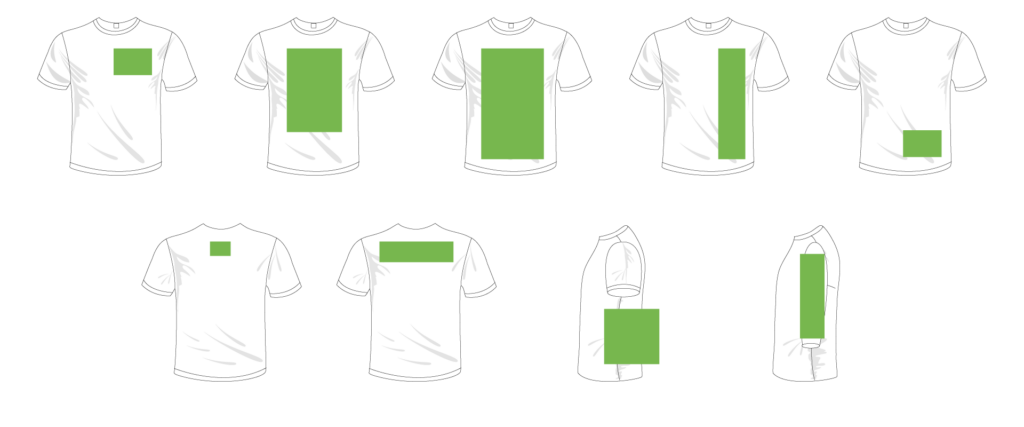
Positions